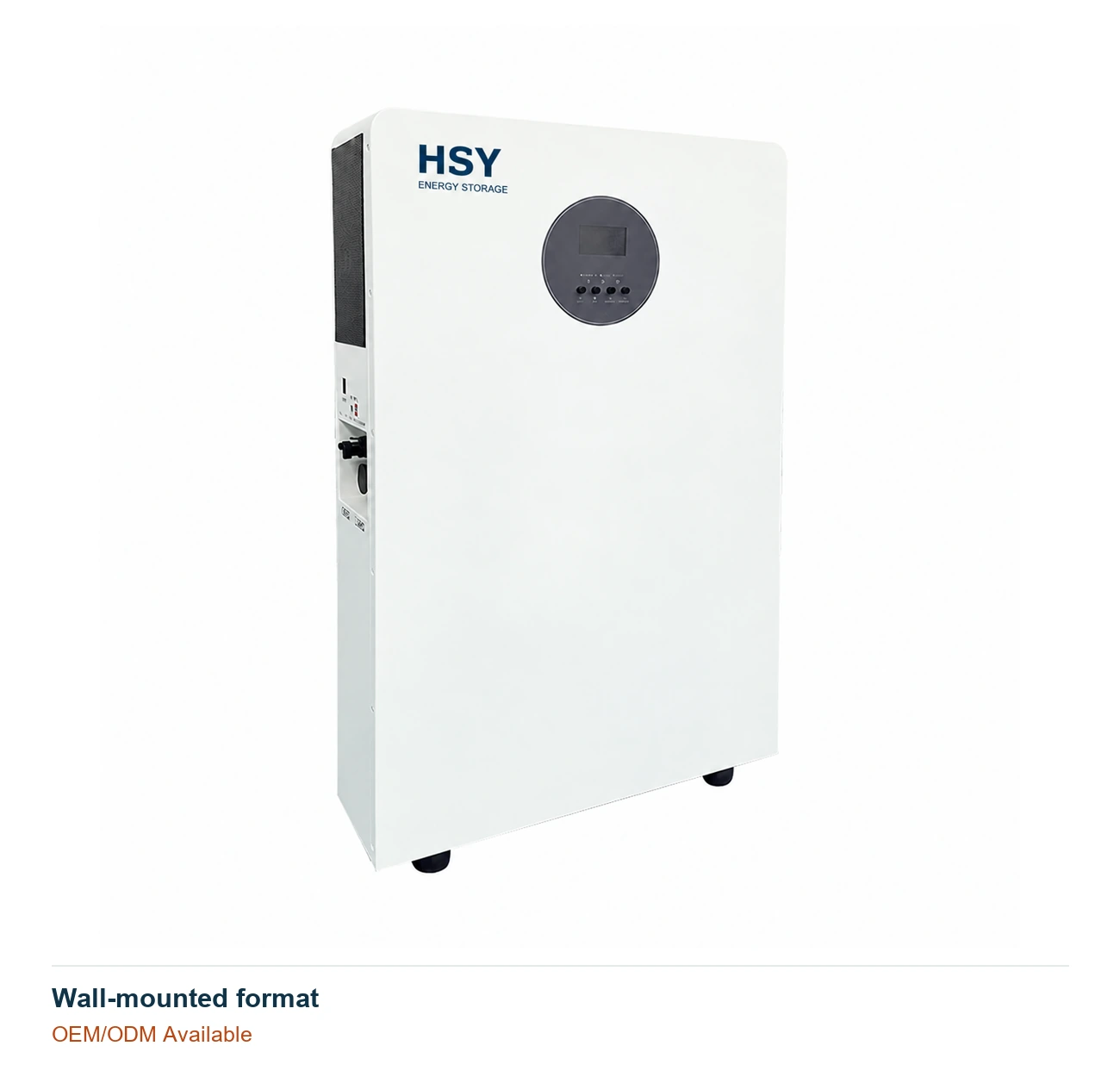
Wall-mounted home battery
Save floor space with wall installation. Share mounting conditions and required capacity when enquiring.
View wall-mounted solutionExplore wall-mounted, wheeled, stacked and rack-format home batteries. Choose by battery voltage, actual stored energy and installation space; inverter and distribution equipment follow the project proposal. HSY OEM/ODM procurement is available.
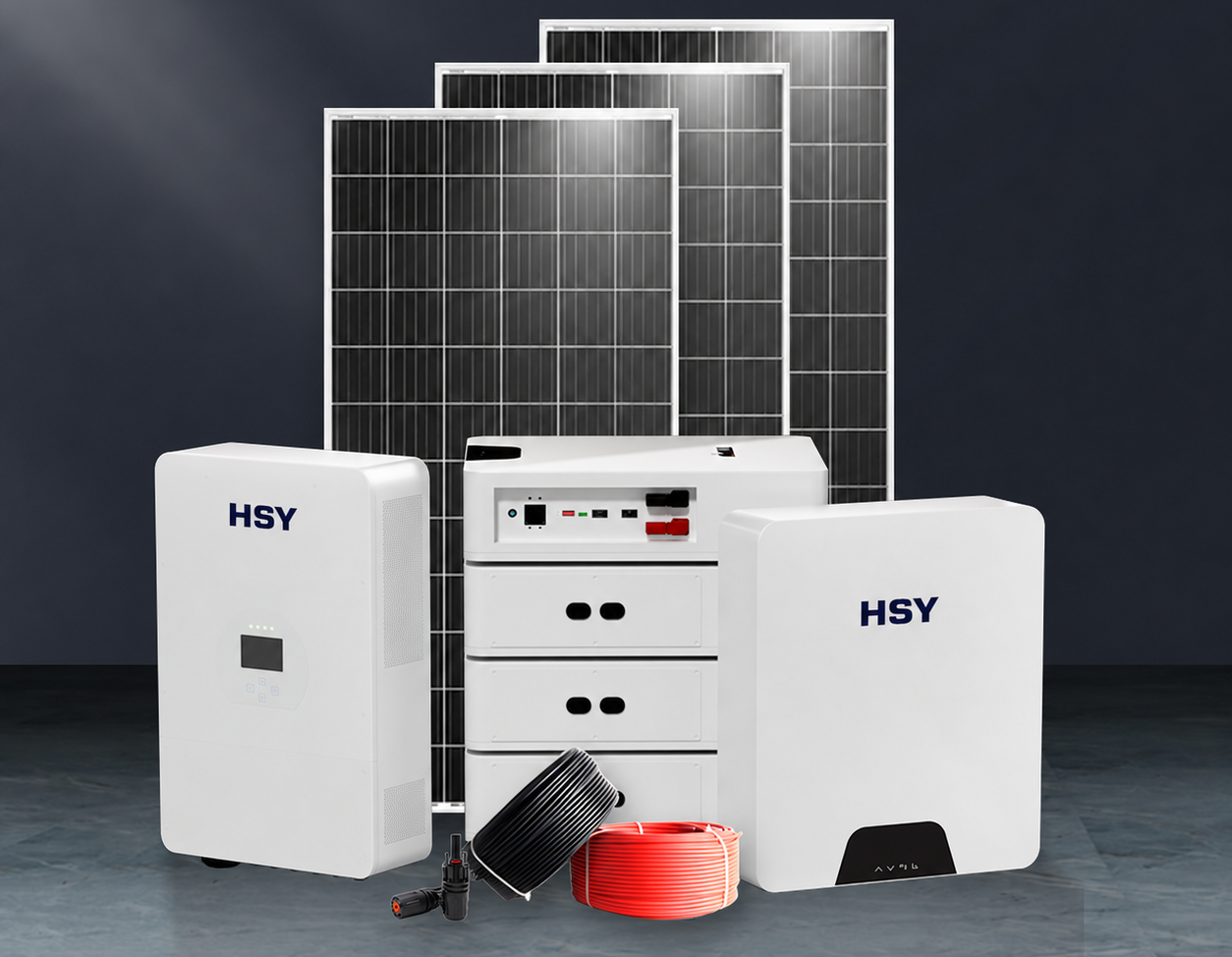
Compare mounting formats, module energy and system configuration for your project.
Save floor space with wall installation. Share mounting conditions and required capacity when enquiring.
View wall-mounted solution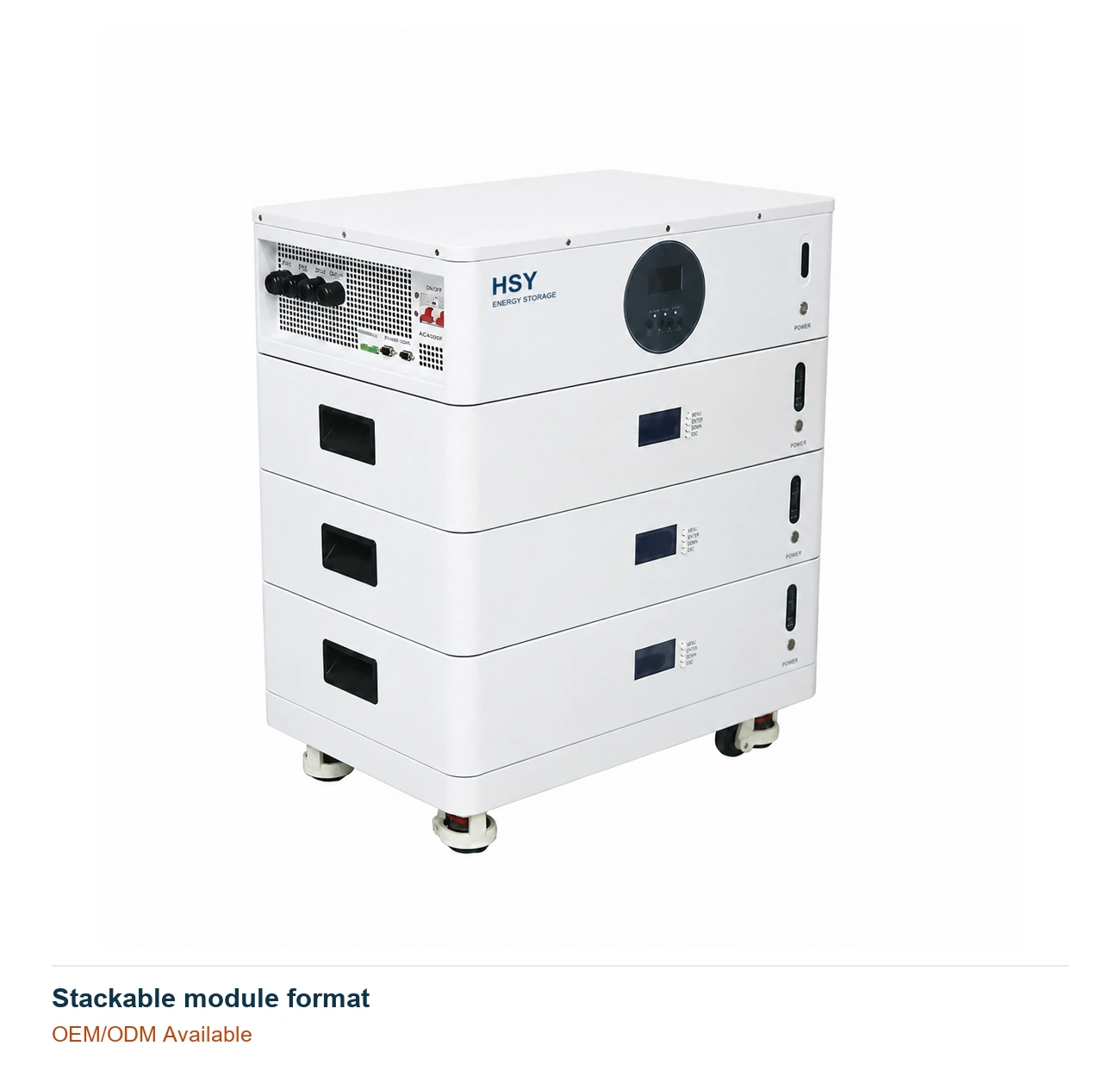
Combine modules to match capacity needs and plan equipment space and expansion.
View stackable solution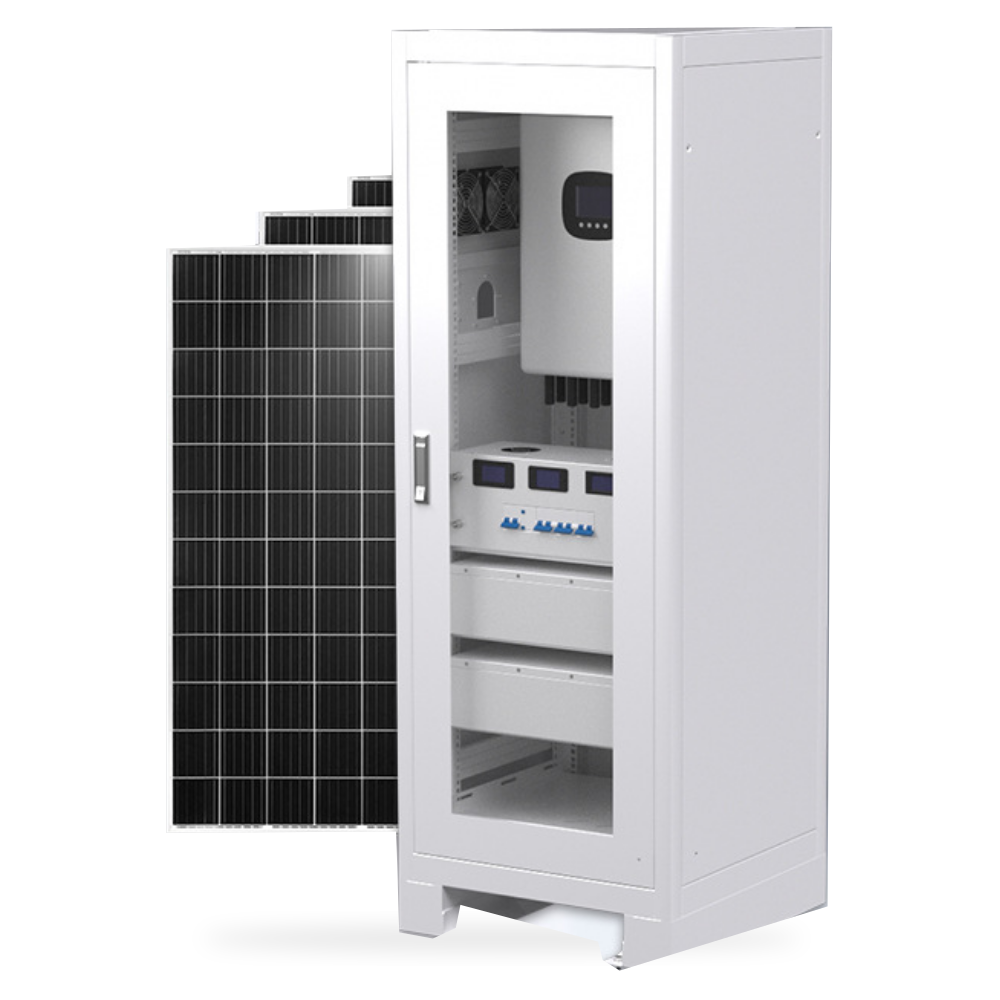
Organize batteries and electrical equipment in a dedicated equipment area.
View rack-mounted solution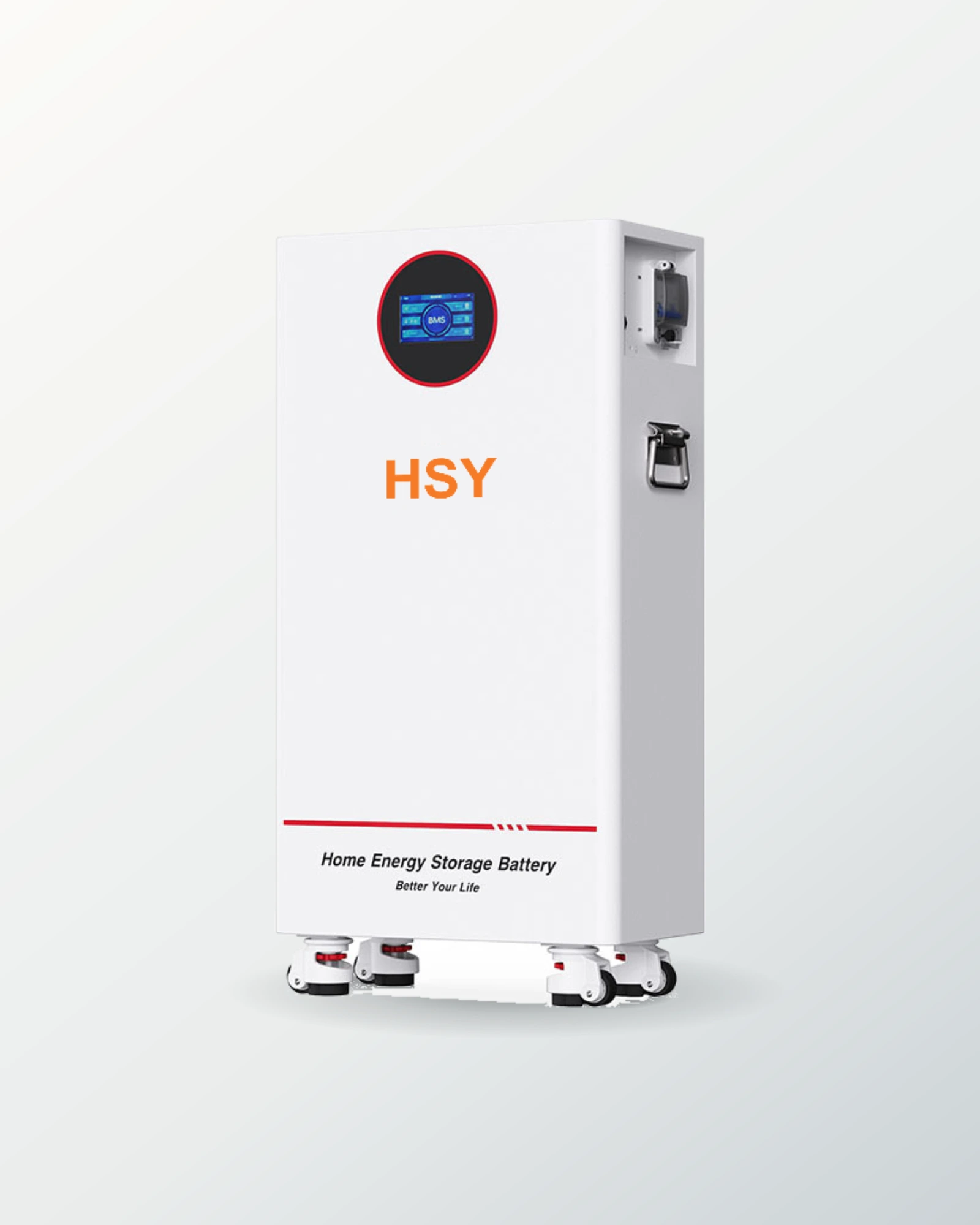
HSY · HSY-D16KWH-P04
HSY-D16KWH-P04 is a slim, wheeled LiFePO4 home battery with a 51.2V platform, 314Ah capacity and 16.08kWh nominal energy. Its side handle and connection area support a dedicated battery layout with a compatible external inverter. Inverter and solar panels are not included.
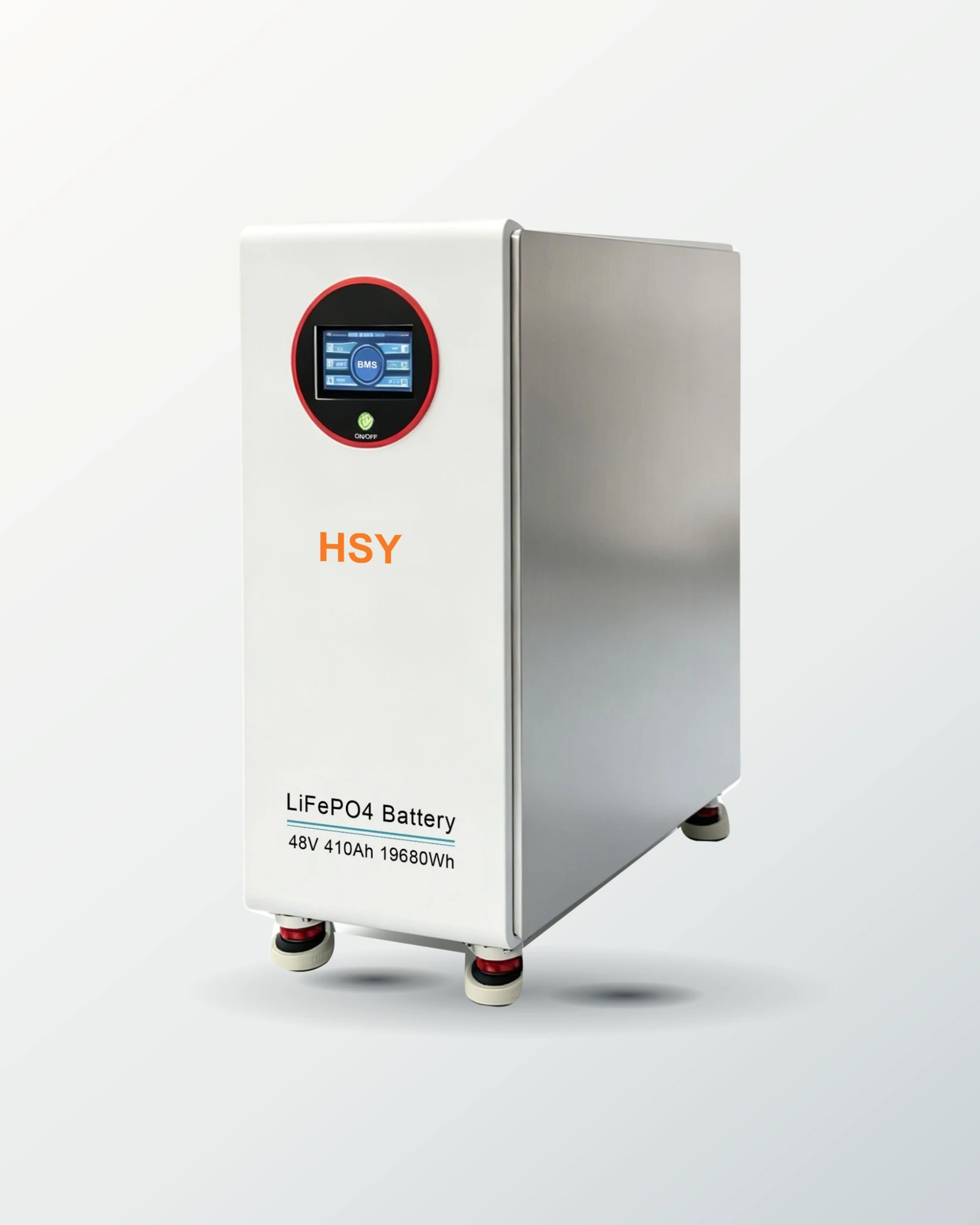
HSY · HSY-D20KWH
HSY-D20KWH is a 48V, 410Ah LiFePO4 home battery with 19.68kWh of nominal energy in a deep, wheeled enclosure. It provides DC storage for a system with an external inverter selected for its operating voltage range. Inverter and solar panels are not included.
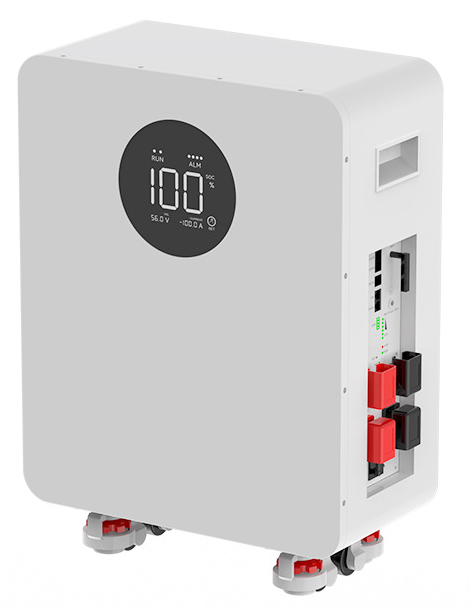
HSY · THS8 · 25.6V / 306Ah
THS8: 25.6V / 306Ah / 7.8kWh LiFePO4. The lower-energy 25.6V configuration suits projects that first need to match a low-voltage inverter and installation space before sizing backup circuits.
HSY · THS8 · 25.6V / 314Ah
THS8: 25.6V / 314Ah / 8.03kWh LiFePO4. This 314Ah version retains the THS8 25.6V platform and enclosure dimensions. Specify it separately from the 306Ah option when selecting the battery package.
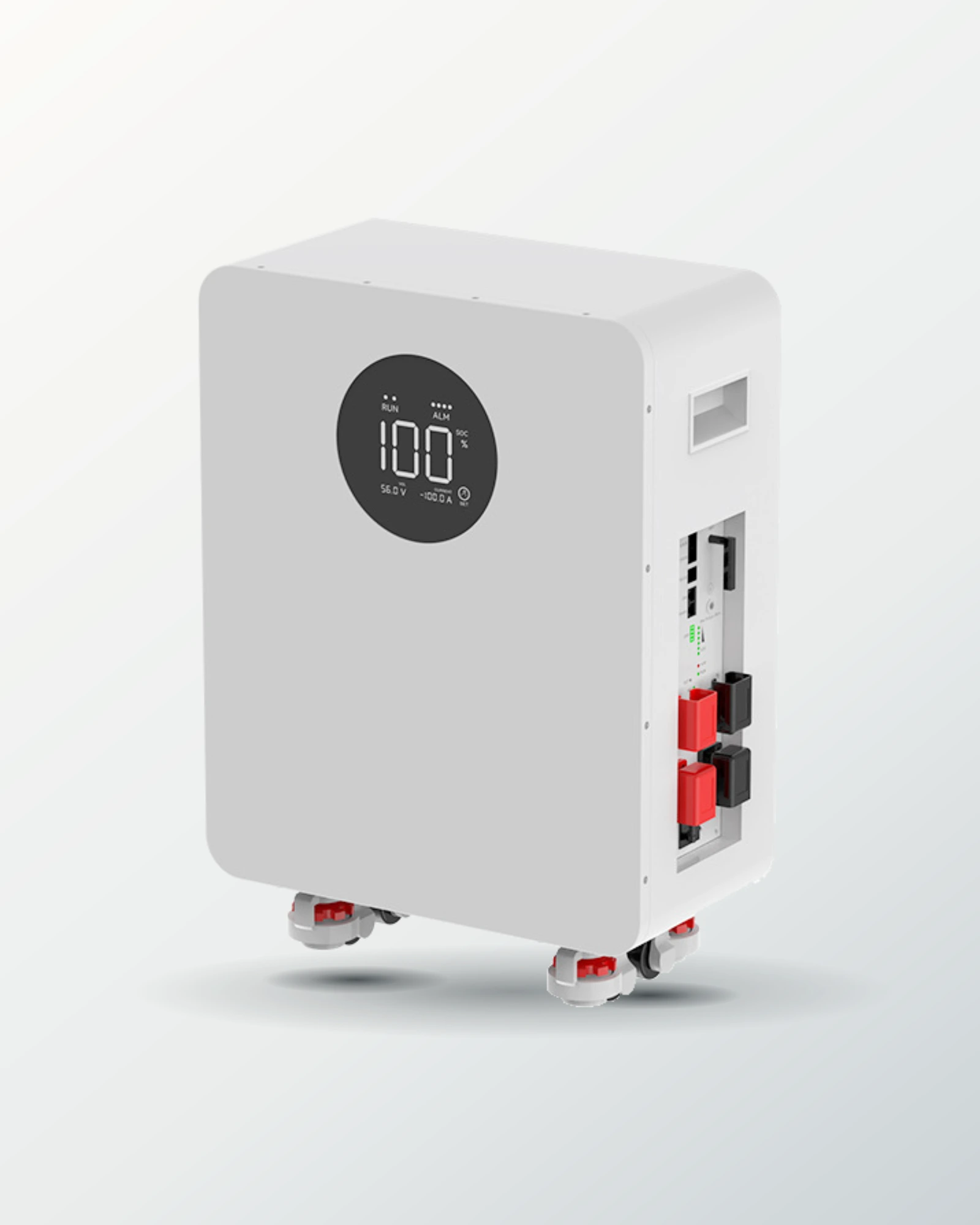
HSY · THS10
THS10 is a floor-standing LiFePO4 home battery with wheels, rated at 51.2V, 200Ah and 10.24kWh. It stores DC energy for a home storage system paired with a compatible external inverter. Inverter and solar panels are not included.
HSY · THS15 · 51.2V / 280Ah
THS15: 51.2V / 280Ah / 14.3kWh LiFePO4. The 280Ah configuration offers a separate step above THS10 on the 51.2V platform. Allow for its larger enclosure and service access when planning the installation.
HSY · THS15 · 51.2V / 306Ah
THS15: 51.2V / 306Ah / 15.66kWh LiFePO4. The 306Ah THS15 provides more nominal energy within the same enclosure size as its 280Ah sibling, supporting side-by-side selection by distributors and installers.
HSY · THS16 · 51.2V / 314Ah
THS16: 51.2V / 314Ah / 16.07kWh LiFePO4. THS16 uses 51.2V and 314Ah for home projects prioritizing stored energy per enclosure. It is a different model from the UBT 16.08kWh battery; match its communications and installation requirements separately.
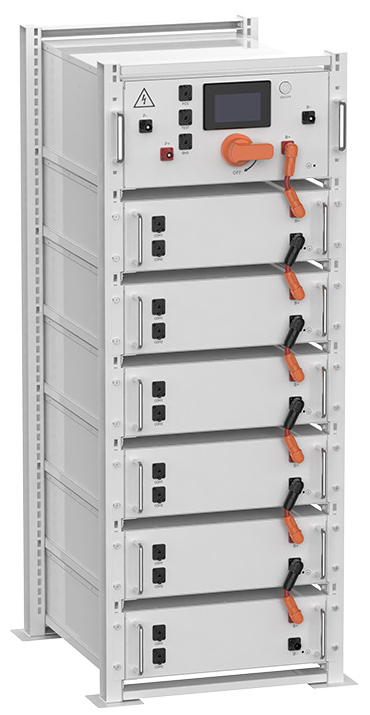
HSY · THS-R-HV20
THS-R-HV20: 4 × 5.12kWh modules, 20.48kWh nominal energy and 204.8V nominal system voltage. The four-module rack occupies the lower-voltage end of this range. Start by checking the inverter’s minimum battery input and full operating window.
HSY · THS-R-HV25
THS-R-HV25: 5 × 5.12kWh modules, 25.6kWh nominal energy and 256V nominal system voltage. The five-module configuration sits between HV20 and HV30, allowing selection around rack height and battery voltage rather than energy alone.
HSY · THS-R-HV35
THS-R-HV35: 7 × 5.12kWh modules, 35.84kWh nominal energy and 358.4V nominal system voltage. Seven series-connected modules add one module beyond HV30. Both stored energy and system voltage change, so expansion requires a fresh electrical compatibility check.
HSY · THS-R-HV40
THS-R-HV40: 8 × 5.12kWh modules, 40.96kWh nominal energy and 409.6V nominal system voltage. The eight-module rack targets greater energy per rack. Coordinate DC isolation, cabling and service access with its system-voltage range.
HSY · THS-R-HV46
THS-R-HV46: 9 × 5.12kWh modules, 46.08kWh nominal energy and 460.8V nominal system voltage. Nine modules provide nominal energy approaching 50kWh while increasing the voltage class. Select controls and protection as part of a high-voltage battery system.
HSY · THS-R-HV51
THS-R-HV51: 10 × 5.12kWh modules, 51.2kWh nominal energy and 512V nominal system voltage. The ten-module configuration is the largest rack listed in this table. Its 512V nominal system voltage differs from a 51.2V home battery and requires a compatible high-voltage connection.
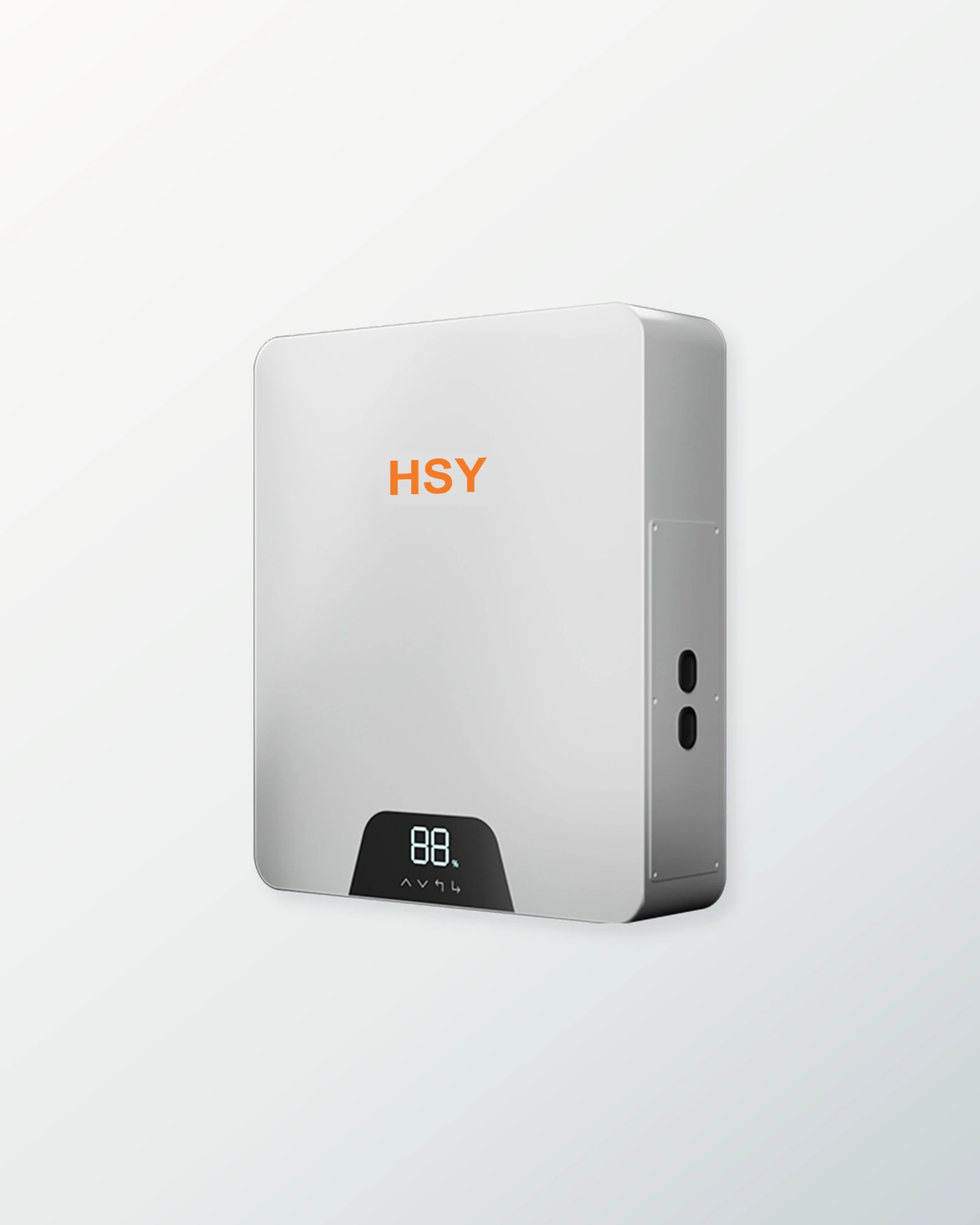
HSY · HSY HW-B01
HW-B01 identifies a 51.2V, 100Ah wall-mounted LiFePO4 battery configuration with 5.12kWh of nominal energy. Wall mounting keeps floor space available in a home storage installation using a compatible external inverter. Inverter and solar panels are not included.
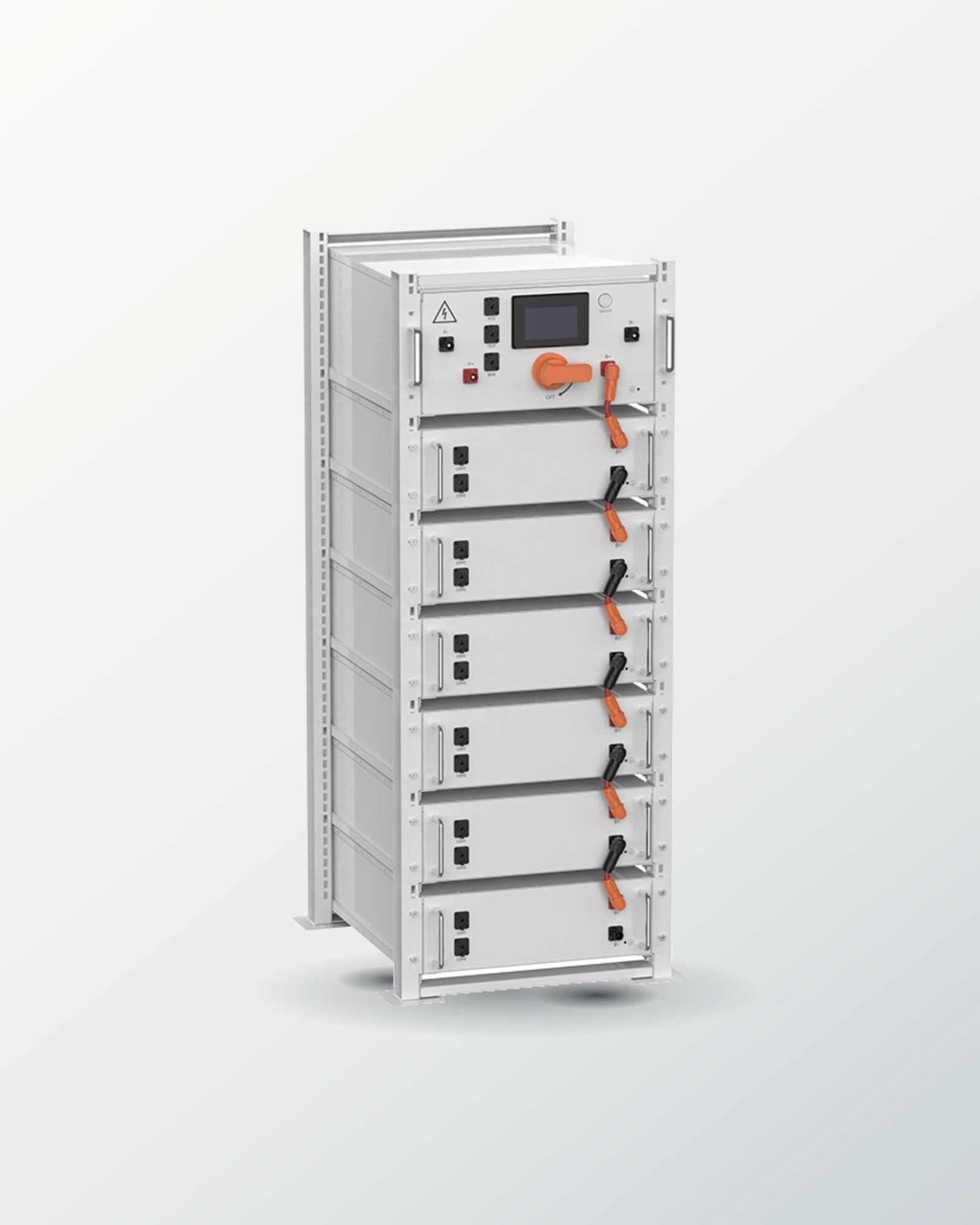
HSY · THS-R-HV30
THS-R-HV30 combines six 51.2V, 100Ah, 5.12kWh battery modules in a 307.2V, 100Ah, 30.72kWh rack assembly. The battery assembly includes its controller and rack and requires a compatible high-voltage inverter for household AC loads. Inverter and solar panels are not included.
The range includes different voltages, capacities and mounting formats. Not every model uses a 5.12kWh module.
Select around the actual operating conditions and procurement requirements.
Plan protected circuits around essential lighting, communications and other critical loads.
Match storage capacity to solar generation, household demand and the inverter.
Define electrical versions, mounting format and OEM/ODM requirements for the target market.
For brands, distributors, installers and integrators: discuss the target market, configuration and procurement plan.
5.12 kWh is nominal module energy; 100 Ah is nominal charge capacity. 51.2 V × 100 Ah = 5.12 kWh. Usable energy also depends on operating conditions and system settings.
A typical configuration uses two 5.12 kWh modules. System voltage, connections and inverter selection depend on the project design.
Compare installation space, capacity and access for maintenance. Consider wall mounting for wall space, stacking for modular arrangements and racks for centralized equipment.
Specify whether you need batteries, an inverter, connection accessories or a combined solution. The quotation lists equipment, configuration and supply scope separately.
Yes. Provide the target market, product format, quantity and branding or functional requirements to prepare configuration details, documents and a quotation.
Send your application, destination, quantity and power requirements through our enquiry form.